
Feed on
Posts
Comments

Biomimicry

Hold on to your seats, because I’ve got some pretty amazing news about green building technology. It all started out earlier this afternoon when I was browsing around on BuildingGreen.com. They have a well-organized site offering lots of information about anything from green building products to new water-saving techniques. Before long, I found a news article with a link to AskNature.org (another very informative website), and that is where my tangent began.

AskNature.org kept alluding to biomimicry, and since I had never heard of biomimicry before, I decided to do a little further investigation. Biomimicry, it seems, is the process of mimicking nature’s solutions to solve human problems. For example, scientists are using sophisticated computer programs to mimic bone structures in order to make cars up to 30% lighter, but still maintaining the same crash-test ratings.

I found information about many different biomimicry projects; everything from butterfly-wing pants to photovoltaic paint. But by far, the most far-fetched and interesting idea I read about was BIOSTEEL®. Now, this isn’t exactly cutting-edge news. In fact, my information is sadly outdated. But sometime around 2001-02, Nexia Biotechnologies Inc., from Montreal, ”produced” a transgenic goat with the capability of producing synthetic spider silk. I know what you’re thinking, and let me tell you, it gets even crazier!

Willow, as they called her, was created when Nexia scientists took a single goat embryo and injected it with special sequences of spider genes. The modified embryo was then inserted into a surrogate mother goat and - POOF! - Willow, the spider-goat!

Now Willow can’t climb walls or fight crime, but her modified mammary glands do produce long-chain amino acids that are almost identical to spider silk. So with a little processing, Nexia was able to transform Willow’s mutant goat milk into a synthetic spider silk (BIOSTEEL®) that exhibited a tensile strength triple that of steel.

The production of BIOSTEEL® was a very promising concept. Everyone seemed to be holding their breath. The medical field, the building industry, even the military; they all wanted it to go somewhere. Unfortunately, BIOSTEEL® and Nexia fizzled-out shortly thereafter. I’m not sure what has become of Willow the spider-goat, but the whole ordeal sure made my afternoon a lot more interesting.

Now that I’ve given a brief summary about the rise and fall of one of Canada’s premier biotechnology firms, I have to bring my tangent back to the beginning. Today’s builders and architects can learn a lot from nature. The natural world that we see around us has had billions of years of research and development, and the more we follow the patterns of nature, the more efficient our designs will be. I don’t think we should be trying to re-engineer goats, but I do think that we can benefit from nature’s expertise.

A Great Place to Start

Now that things have calmed down a little, I’m able to take some time to learn a little more about going green. Let me tell you, the more you learn, the less you know!

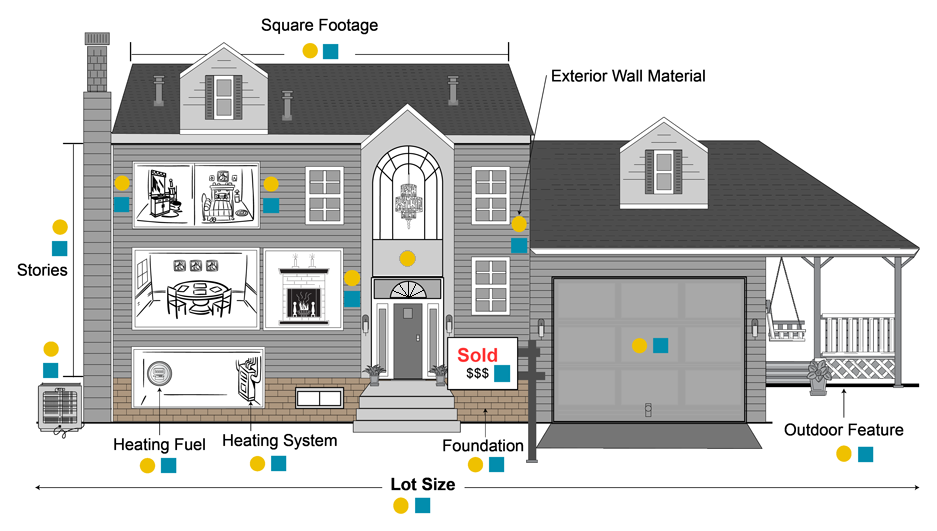
I found a great site earlier today called greenbuilding.com. Now, I hope I’ve made it abundantly clear that I am an extreme novice when it comes to this sort of thing. All the same, greenbuilding.com has a lot to offer. The homepage has a mock-houseplan that provides a lot of helpful and practical information about making each part of your home just a little greener.

I always thought that a true green homeplan would have all sorts of photovoltaic panels and other super-expensive space-age gadgetry, but greenbuilding.com explains that green building is more concerned with adapting the design to the environment than adapting the environment to the design.

Adapting your homeplan is a lot easier than it sounds! It involves a little bit of thought and a deep working knowledge of the local climate, but by putting forth just a little more effort and using some common sense, your home can save money and the environment.

I also found it very interesting how much attention is paid to your personal health. Up until now, I thought that green building was all about conserving energy and non-renewable materials. It really is, but green building also keeps a keen eye on improving health conditions by reducing indoor air-pollution, etc. I was also surprised to see that there are very traceable beginnings to the Green Movement as early as 1973.

In all, I was very impressed with what I saw. You should really check it out!

A Luxurious Green

I’m sorry that it has taken me so long to write a new post, but I hope that you’ll forgive me. For those of you who remember taking final exams at the end of the semester at college, you’ll understand when I say that I just didn’t have time.

That being said, I did find something interesting the other day. Behold Vetrazzo®, the world’s foremost manufacturer of recycled-material countertops.

Vetrazzo was invented in 1996 by a passionate glass scientist in California’s Bay area. The main premise behind Vetrazzo is that it uses recycled glass and an eco-friendly bonding agent to create a hard material that is comparable to granite or marble in use and function. Each slab of Vetrazzo is unique. Recycled glass from used bottles, windshields, and even decommissioned traffic lights makes up 85% of each slab. The bonding cement even uses fly ash (a by-product from coal-burning power plants).

Since its invention almost 13 years ago, Vetrazzo has been far more successful than anyone could have expected. Even more important than the popularity and success, however, is Vetrazzo’s committment to the environment.

You see, not only is Vetrazzo made mostly from recycled materials; it is manufactured in a recycled Ford Automotive plant, Workers are all paid a living wage (no exploitation), and all material and labor comes entirely from the USA, making Vetrazzo a truly sustainable organization. It really  seems like they’re trying to make the world a better place for you and me.

Unfortunately, because Vetrazzo is located in the California Bay area, I haven’t been able to see any of it personally. I understand they have distributors located all over the country; I just haven’t had the chance to look into it yet. At any rate, if you are building a new home or remodeling an old one, you should really look into Vetrazzo®. Each slab is a luxurious work of art that can help make everyone a little better off. You should Check it Out!

An Informal Intro

If there is actually someone out there that really reads these blogs, I feel like I need to explain a few things. Woody and Engjake are two of my good friends. I have worked with them both at www.theplancollection.com for over a year now. They started this blog as a place where they could discuss their love of green home design with anyone who would listen.

Well, earlier this year, Woody had some really great opportunities open up elsewhere. He is now working to make his dream of becoming an influential green interior designer a reality, but before he left, I agreed to take up his post here at www.houseplans.info.

I hope you don’t mind if I give you a little bit of an introduction about myself. I sort of stumbled into the world of residential design when I began working in the data-entry portion of The Plan Collection. I didn’t know the first thing about home design when I first started. I’m still not what you’d call a professional residential design consultant, but I have learned a lot about the industry during my time here.

I’ve also never really been too interested in this whole “green” movement (please forgive me). Don’t get me wrong — I love the environment. I can’t think of a better way to spend a weekend than to go out adventuring in the beautiful mountains here in Northern Utah. I do my best with my meager funds to make the environment a better place to live for me and for future generations. I’ve just never had much exposure to the “greener” side of things.

Working with Woody really opened my eyes to a lot of sustainable and practical options. So whether you’re like me and you’re new to the green way of life, or you’ve been fighting for the green cause since the beginning, please feel free to comment. Criticism is great, and compliments are even better. I’m just now starting my journey into a greener lifestyle, so please let me know what you think. Thanks!


(P.S. I’ll try to include more info about House Plans. This blog is called HOUSEPLANS.info!)

About a year ago, we posted an article about straw bale construction. It was starting to build popularity then and it has only gotten bigger since. Countless people around the country have been constructing homes with straw bales as their exterior walls. Many have a misconception that it is just overexertion with little benefit.  This is pretty much as far as you can get from the truth.

Bale construction has advanced so much recently.  You can still purchase bales straight from the farm.  These “field bales” are very easy to get and can cut on the cost.  If you are looking for the highest quality there are high-density bales that can support up to 4000 pounds per linear foot. How’s that for innovation?

Here are a few pictures I found on Wikipedia.org that show how awesome straw-bale construction can be:

Straw Bale Construction

This shows the straw bales during construction

Straw Bale Homes

This shows a fully-finished straw bale home.

Straw Bale Homes

This shows how luxurious a straw bale home can really be!

For years, Clemson has been designing houses for Habitat for Humanity during their homecoming week. Each year, there are rows of volunteer students that gather on Bowman Field and begin construction on a home being donated to a family in the area. The house being built this year is based up plans designed by students for a competition. It has a much greener design than seen in years past.

This home was designed with passive solar capabilities in mind. This wasn’t the only special attention. Consideration was give to everything from the caulking to the type of nails that were used. The home will not only be helping the family to have a home but they will receive a house that can cut down on bills and last for years.

Vote Green

As we all know, our economy hasn’t not been the hottest lately. With frequent changes in the stock market and large fluctuation in oil prices Congressmen are in constant search of a solution. The economic stimulus packages were supposed to be the answer to our problems. These, however, have done little to solve the country’s dilemma.

One idea that has been passed around for years with lukewarm reception is to invest in green industries. Many thought this would only worsen the situation but new light is being shed on how much it really could help. Not only would changes in this direction help our economy rebound, there would also be less of a dependency on fossil-fuel.

The green industry has so much potential right now. Many of the buildings throughout any city in America are aged and were constructed without knowledge of what they would do to the environment and how they would cause such a dependency on recyclable materials. If the government were to spend money on boosting efforts to update these we would get more jobs for the estimated 400,000 construction workers that will be without a job this year. This appears to be one of the smartest areas for Congress to expand funding. To put money in the green sector, the country would gain one of the biggest growths in jobs.

Model Green Town

A major tornado has just passed through and nearly removed your city from the map, what do you do? Well, Greensburg, Kansas decided this would be the perfect time to make their town more green. The efforts of this community have not gone unnoticed. They are now being featured in the National Building Museum. Greensburg along with a handful of other cities are being celebrated for the shift to a green life.

To accomplish the task of being green certified, the town is building all of its public buildings to meet the strict efficiency codes. They are bringing windmills back to the landscape around town and saving water from every rainstorm. This town has made major steps that few can make without starting from scratch. Who knows, though? Maybe if you can get your city to start working at this you could be featured in the next green exhibit at the National Building Museum.

Online Green Social Network

Freegreen.com is your one-stop green website. This company has everything from products to lessen your carbon footprint to it’s own green social network similar to Facebook and Myspace. You can look at house plans with green features built into them. Once you have a home picked out you can browse over green builders in your area. This website has so many great things to explore you will need to spend a couple hours to truly find all this website has to offer.

Green Roofing Details

Green Roof Layers

After I posted the article yesterday I searched out what exactly goes into making a green roof. Roofhelper.com has a whole section dedicated to green roofs. This site has a basic overview on what materials go into green roofs and what benefits these roofs can provide. This had some cool info that I though I should let you know about.

Older Posts »